



HAPPY NEW YEAR!!!!!!
There were many times, while sitting on the beach in Florida during my vacation, that I reflected on 2025 and still can’t believe the year we had. Absolutely amazing!! And as I’m sitting here writing our first newsletter for 2026, I’m still in shock about just how awesome the previous year was. We are now half way through the third year of me returning to, and teaching in the Niagara Region and everything is perfectly balanced between the business and my personal life, and for the first time, I can’t wait to tackle the new year regarding both. Our trip to Florida was fantastic! Spending New Year’s Eve with Sue and her family was wonderful, and ringing in 2026 with her on the beach while we sipped champagne under the fireworks couldn’t have been any better. By midnight I had been up for roughly 40 hours due to lack of sleep from the excitement of going on the trip, my day of traveling and the excitement of seeing Sue since she flew down a couple of weeks before I did, but I wasn’t going to miss that moment with her. I also did pretty good with my tan, as it’s been the first thing everyone has noticed when I arrive for lessons…lol. Sue was very diligent about making sure I not only used my sunscreen, but re-applied it as well. I’m notoriously bad for not doing both of those, so she had my full permission to make sure I did. There are some photos of our trip below in the CODA section. Here’s what we have for our first newsletter of 2026…..
- Recent Awards Received
- Alex On Vacation…..Again
- Beethoven’s 9th Symphony
- This Month In Music History
- Student Of The Month
Recent Awards Received
In the November newsletter before the Christmas break, I announced that we received two Readers’ Choice Business Awards for ‘Best Music Instruction’ and ‘Best Music Instructor’. In early December, I received them, and both were combined into the physical copy. Thanks again to everyone for the votes and I now have it proudly displayed in my office. 🙂

Alex On Vacation…..Again

I’m taking a vacation!!….Again!! This vacation is a combination of time off for a surgical procedure I’m having done, and leisure in Florida again for Sue and I. As always, I will be handing out physical reminders to put up on your fridge. Here’s all the details and how billing will be handled:
- Vacation Dates: March 9 – March 25, 2026
- Last Day of Lessons before my vacation: Sunday, March 8th
- Lessons Resume: Thursday, March 26, 2026
- How Will Billing Work?: I will not be billing for lessons that would normally take place during my vacation time. March invoices will still be dated and due for March 1st, and will be sent out approximately 12-14 days prior, as per usual. Please plan accordingly. In addition, there will be a short turn around period for the April invoices to be due because of when I return so please be prepared for that.
I know this goes without saying, but I will not be answering emails, texts or phone calls regarding the school while I’m away. I’ll be enjoying the beach and sun in Florida!!
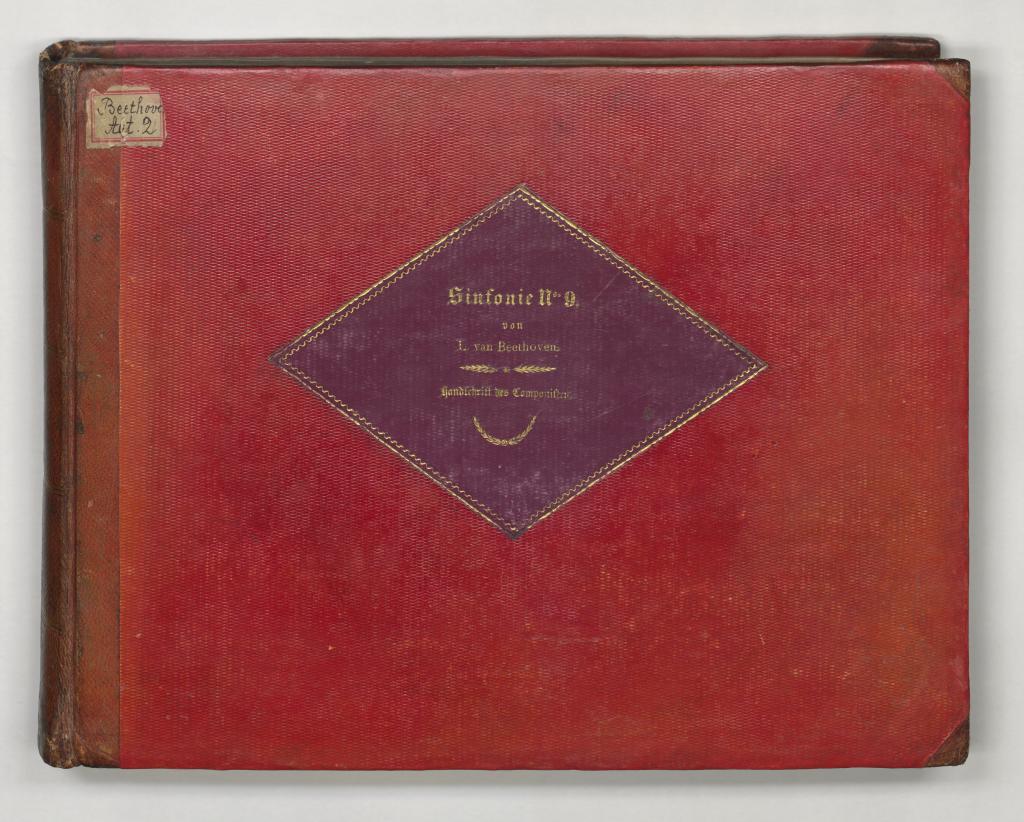
Beethoven’s 9th Symphony
I’ve talked about doing this feature for a few months now and as everyone knows, I have ALOT to say about this masterpiece. Beethoven’s 9th symphony (many know it as the ‘Ode To Joy’ symphony) is still regarded as the greatest musical work ever written, and ever will be. Not only is Beethoven my favourite composer, the 9th symphony is my favourite of all musical works. Without ‘the 9th’, orchestral music would not be in its current form, film music wouldn’t exist, and the Romantic Era of music would have come to a conclusion sooner than it did. As some of you know, last year I spent 6 weeks doing a full and complete musical analysis of the 9th symphony, and this past December, Beethoven would have been 255 years old, so I thought now would be the perfect time to dive into the sheer genius of this piece. This feature will not be including my analysis, as that is just too grand to include and requires a certain level of music theory knowledge to understand, but will be presented in point form to give an overall look at how it came to be, how it almost wasn’t premiered, how Beethoven persevered despite many setbacks, and the influences surrounding Beethoven’s life when he composed it, in addition to the influence of his 9th symphony after it premiered. And trust me when I say that this is the VERY condensed version considering I could talk for hours on this topic. See what you have to look forward to, Sue? (I’m kidding….maybe)
- Ludwig van Beethoven was born in December, 1770 in Bonn, Germany. The exact day of his birth is unknown but he was baptised on December 17th, so it is speculated that he was born on December 16th. Beethoven showed incredible promise as a musician early on, and because of the popularity of Mozart being a child prodigy, Beethoven’s father would lie about his son’s age, telling people he was younger than he was to compete with the fame of Mozart’s.
- At the age of 23 (1793), Beethoven was first introduced to a poem that was written by the German poet, Friedrich Schiller, published in 1785, and titled “An die Freude (Ode To Joy)”. The themes of Schiller’s ‘Ode’ celebrated universal brotherhood , friendship, love, finding a higher power and unity. These themes appealed to Beethoven as he was a child of the Age of Enlightenment, a period that shared the themes of Schiller’s poem. Beethoven immediately knew he wanted to use Schiller’s text in a musical setting but it would be many many years before he would do so.
- Beethoven moved to Vienna in 1792 to study composition with Joseph Haydn. At this point he was known more as a piano player than a composer. To gain recongnition as a composer, Beethoven’s first and second symphony works were written in a strict ‘classical’ style, similar to Mozart. But it was his third symphony, the ‘Eroica’ symphony, where Beethoven began to experiment with his style, and not only was the ‘Eroica’ the single musical work that flipped the Classical Era of music to the Romantic Era of music, but it paved the way for Beethoven to experiment ‘outside of the box’ moving forward, which was integral to not only his symphonies that followed, but his 9th symphony years later.
- Beethoven didn’t rush into using Schiller’s ‘Ode To Joy’. He knew that he wanted to use it on a grand scale, but didn’t know what that would be yet. During his career, there were multiple times that his ‘9th’ was foreshadowed in pieces he wrote. In 1808 he composed his ‘Choral Fantasy’ and the climax included a choir and vocal soloists, as he does with the final movement of the ‘9th’, and some themes written for the Fantasy are very reminiscent of themes in the 9th Symphony. He also had many sketches for compositions that were never written or completed and one sketch he wrote in 1815 ended up being used as the main theme in the second movement (Scherzo) of the ‘9th’.
- Beethoven’s darkest period of his life was between 1810 and 1820. He removed himself from public appearance because of being embarassed about his growing deafness, he attempted suicide multiple times, his love life was in a constant downwards spiral, he was involved in an intensive legal battle to gain full custody of his nephew, Karl, after his brother Kaspar died, he deals with multiple health related issues, and Vienna was still being invaded by Napolean’s forces until his defeat in 1815. During these years, Beethoven stopped composing, his final symphonic work during this period was Symphony No. 8 composed in 1812, and his final public performance as a soloist was in 1814 due to his increased hearing loss.
- There is a story of Beethoven walking the streets of Vienna one evening in 1815 and being very intoxicated. After being approached by two police officers for being publicly intoxicated, he tells them who he is, but they don’t believe him and proceed to lock him up overnight. At this point Beethoven knows he has really hit rock bottom and this event, in addition to other events, leads to his resurgence and he decides to re-invent himself.
- In 1817, the Philharmonic Society of London commissions Beethoven to write a symphony. He begins some preliminary composition sketches later that year, but the final contract for the symphony isn’t completed and signed until 1822, and it is at this time that he begins the main composition work on his final symphony….Symphony No. 9.
- Aside from continuing to deal with the loss of his hearing, Beethoven continues to write the 9th symphony without any major issues until after the completion of the third movement. It is at this time he suffers from major ‘writer’s block’. He has no idea what to do for the fourth and final movement and struggles with this for some time and expresses his frustrations to his secretary, Anton Schindler. One evening, Schindler is working in the adjacent room to Beethoven’s study and suddenly Beethoven comes charging through the door exclaiming, “I’VE GOT IT!!!” It was then that he decided it was now time to put Schiller’s ‘Ode To Joy’ text to music. During this time, Vienna, and all of Europe, was still dealing with the aftermath of the Napoleonic Wars and the feeling of unity was at it’s peak. A theme that was central in Schiller’s ‘Ode’.
- Beethoven completed composing the ‘9th’ in February, 1824. Two years after he began the main composing work.
- Getting the ‘9th’ premiered came with many setbacks. Solo instrument parts were written for specific players that worked with Beethoven for past performances. Those players had either left Vienna at this point or were dead. The monarchy that Beethoven was employed by and who funded all of his premieres was dead. And his copyist that worked for him for many years? Also dead. There were also internal political issues with personnel at the venues that were being considered for the premiere. The first rehearsal was a disaster because of a communication error which resulted in players not showing up, which lead to only two full rehearsals and the score wasn’t available for rehearsals until 6 days before the premiere.
- At this time, the music scene in Vienna had now shifted to Italian opera, primarily by Italian composer, Gioachino Rossini. Beethoven felt his symphony would not be welcomed and was considering having the premiere in Berlin. When the Viennese heard this, a petition was created by many patrons and performers to keep the premiere in Vienna and when Beethoven learned that they still adored him, he decided to keep the premiere of the ‘9th’ in Vienna.
- On May 7, 1824, at the Theater am Karntnertor in Vienna, Beethoven’s Symphony No. 9 premiered. The orchestra and choir was conducted by Michael Umlauf, but Beethoven, despite being almost completely deaf now, insisted on participating and providing tempos to the conductor and orchestra. Umlauf instructed the orchestra to ignore anything that Beethoven does.
- The premiere was a great success. The fast, second movement (the Scherzo) was interupted by thunderous cheers. Beethoven was not able to hear the reaction and was still waving his hands conducting, to provide tempos to an orchestra he couldn’t hear, so the solo alto singer, Caroline Unger, approached him and turned him around so he could see the reaction. At the conclusion of the performance, the audience tossed hats in the air so that Beethoven could see their reaction since they knew he couldn’t hear it, and there were 5 standing ovations.
- The original autographed manuscript still exists. Some sheets were removed to be held at the Beethoven-Haus in Bonn, Germany, while the majority of the score is being held at the Berlin State Library in Germany. And yes, you can arrange to view it. (Major bucket list item)
- Beethoven died on March 26, 1827. Three years after his Symphony No. 9 premiered.
What Were Some Things That Made The 9th So Influencial?
- It was the first symphonic work to include choir or solo vocalists.
- At the time, it was the largest symphonic work performed, using an orchestra double the size of a standard orchestra, and a choir, and vocal soloists. The instrumentalists numbered approximately 125 players, and the choir for the final movement had over 100 singers, plus the 4 solo vocalists, totalling over 200 performers on stage for the final movement.
- A symphonic work with 4 movements (sections) usually is no more than 25 minutes in length. The 9th is 65 minutes. The final fourth movement is 26 minutes alone, longer than any full length symphony.
- The usual order of the movements for a symphonic work are I. Allegro (Fast), II. Adagio (Slow), III. Trio/Scherzo (Really Fast), and IV. Finale. Beethoven changed the order. He moved the Scherzo to the second movement to continue the momentum from the first movement.
- Beethoven took musical forms that were used prior and used them to create either new forms, such as the Scherzo, or changed some of the theory based rules for other forms. In the first movement, he doesn’t end the movement with one Coda (special ending), but two, and the length of the second Coda is almost an entire quarter of the whole movement which was unheard of.
- Beethoven begins the final fourth movement (Ode To Joy) by slightly referencing the main themes of the prior movements, then referencing the ‘Joy’ theme. This reminds the listeners of where we were, and to inform us of where we are going, and the movement consists of 9 variations of the ‘Joy’ theme.
What Are Some Of The Lasting Influences of The 9th?
- Many composers after Beethoven, such as Brucker, Bartok, and Dvorak have borrowed themes or motifs from the ‘9th’ for their symphonic compositions as tributes to Beethoven. Brahms’ Symphony No. 1 is very much related to the ‘Joy’ theme, so much that some have praised it as Beethoven’s ‘Tenth Symphony’.
- When the Berlin Wall came down, recordings of ‘Ode To Joy’ were played, a performance with Leonard Berstein conducting was performed, and many sang the words in the streets.
- The European Union adopted ‘Ode To Joy’ as the official anthem in 1985.
- Remember “Drink Milk Love Life?” Yup, that was the ‘Joy’ theme. (You’re singing it now, aren’t you?)
- When Sony was first deciding how much music a Compact Disc (CD) was going to hold, they decided on the discs being 74 minutes in length so they could hold a recording of the ‘9th’.
- Many composers after Beethoven refused to write a Symphony No. 9, stopping at their ‘8th’, because they believed that there could be only one ‘9th’.
- Beethoven’s Symphony No. 9 is still the most performed symphonic work by symphony orchestras around the world.
This Month In Music History
Because of the length of the Beethoven Symphony No. 9 feature above, I’ll bring back this section next month. 🙂
Student Of The Month
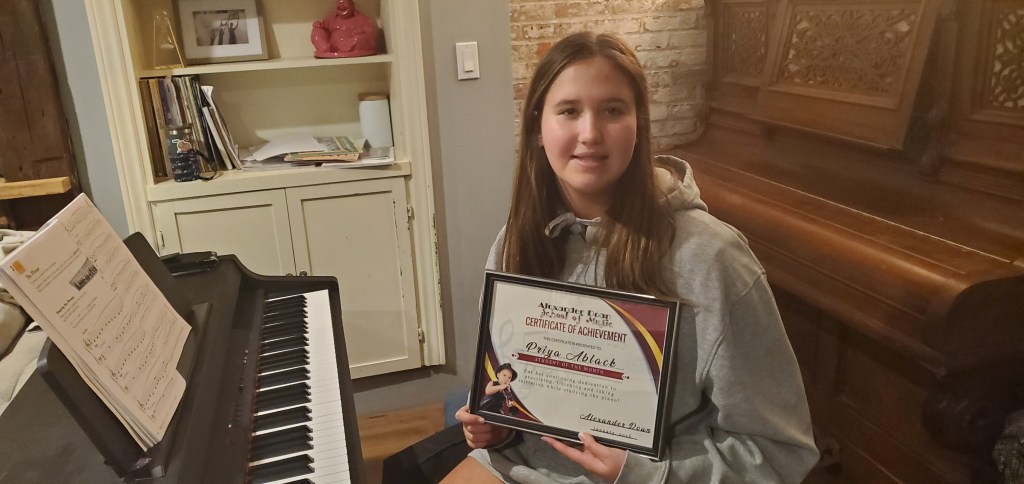
Our Student Of The Month for January, 2026 is, Priya!!
Priya has been one my students from early on and studies piano with me, as do her 3 siblings, Arie, Bence and Atley. Priya has been learning from the Faber Piano Adventures for the Older Beginner series and is getting close to starting the next level. If you were in attendance at our recital this past October, you will have seen Priya performing Beethoven’s ‘Ode To Joy’ and also playing a prank on me by not playing the final chord of the piece, as she knows that drives me crazy (Well played, Priya!). Priya has also decided to continue with music when she enters highschool (Nope, I’m totally not proud at all…hehe) and is also very busy with various sports at school including basketball and volleyball.
Priya received her framed Student Of The Month certificate, and is featured in this months newsletter as well as on our Facebook and Twitter pages, and on the school website when the newsletter is posted there.
Congrats, Priya!!
Coda
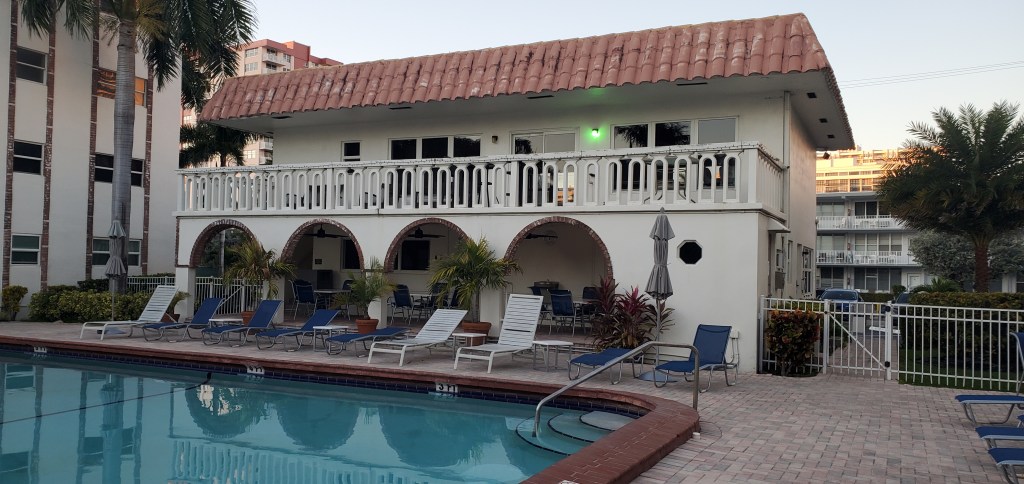
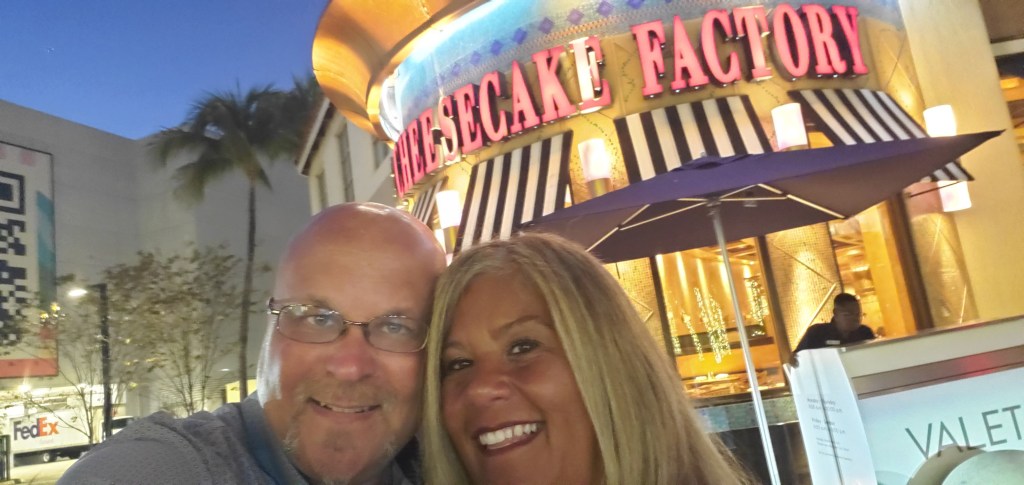
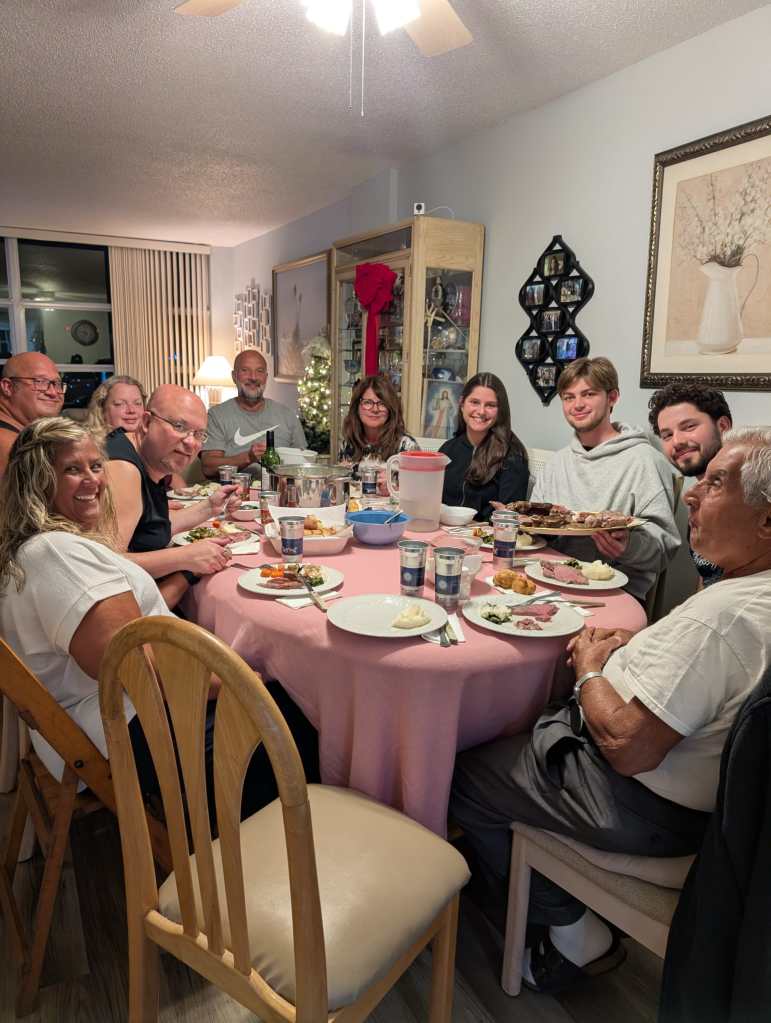
As mentioned above, I’m closing out our first newsletter of 2026 with some photos of our trip to Florida, since many of you have been asking to see some. Enjoy the photos, and I’ll see you in your lessons!!













Socials & Where To Find Us!
- Web: https://www.doansom.com
- Facebook: https://www.facebook.com/ADOANSOM
- Twitter (now ‘X’): https://twitter.com/alexander_doan
- Google Reviews if you would like to leave a review: https://g.page/r/CbNrxK_Veae6EB0/review

